


Introduction
In the rich tapestry of Emirati oral literature, few characters are as beloved and ubiquitous as Juha (also known as Gahha or Nasreddin Hodja in other cultures). This folkloric trickster, a figure of simple wisdom and comic folly, has been a staple of storytelling in the region for centuries. Through his short, humorous anecdotes, Juha serves as a mirror to society, reflecting its flaws, its wisdom, and its contradictions. The tales of Juha are more than just children’s stories; they are a vital vehicle for cultural transmission, teaching lessons of common sense, critical thinking, and humility in a uniquely engaging package.
The Character of Juha: The Wise Fool
Juha is a paradox. He is often portrayed as a simpleton, making absurdly illogical decisions that provoke laughter. In one tale, he might be seen looking for his lost key under a streetlamp, not because he dropped it there, but because the light is better. Yet, in the next story, he can display startling wisdom and cunning, outwitting the powerful and the arrogant. This duality is the core of his appeal. He is the “wise fool” whose apparent stupidity often reveals a deeper truth or exposes the hypocrisy of those who consider themselves his intellectual superiors.
A Tool for Social Commentary and Subversion
The Juha stories functioned as a safe form of social and political commentary. In a traditional, hierarchical society, it was not always possible to openly criticize a sheikh or a wealthy merchant. However, through the veil of a joke about Juha and a foolish judge or a greedy neighbor, storytellers could critique injustice, corruption, and vanity without facing direct reprisal. Juha’s antics gave a voice to the common person, allowing them to laugh at the follies of the powerful and find solace in the fact that even the simplest man could, at times, triumph through wit.
The Storytelling Context: Education Through Entertainment
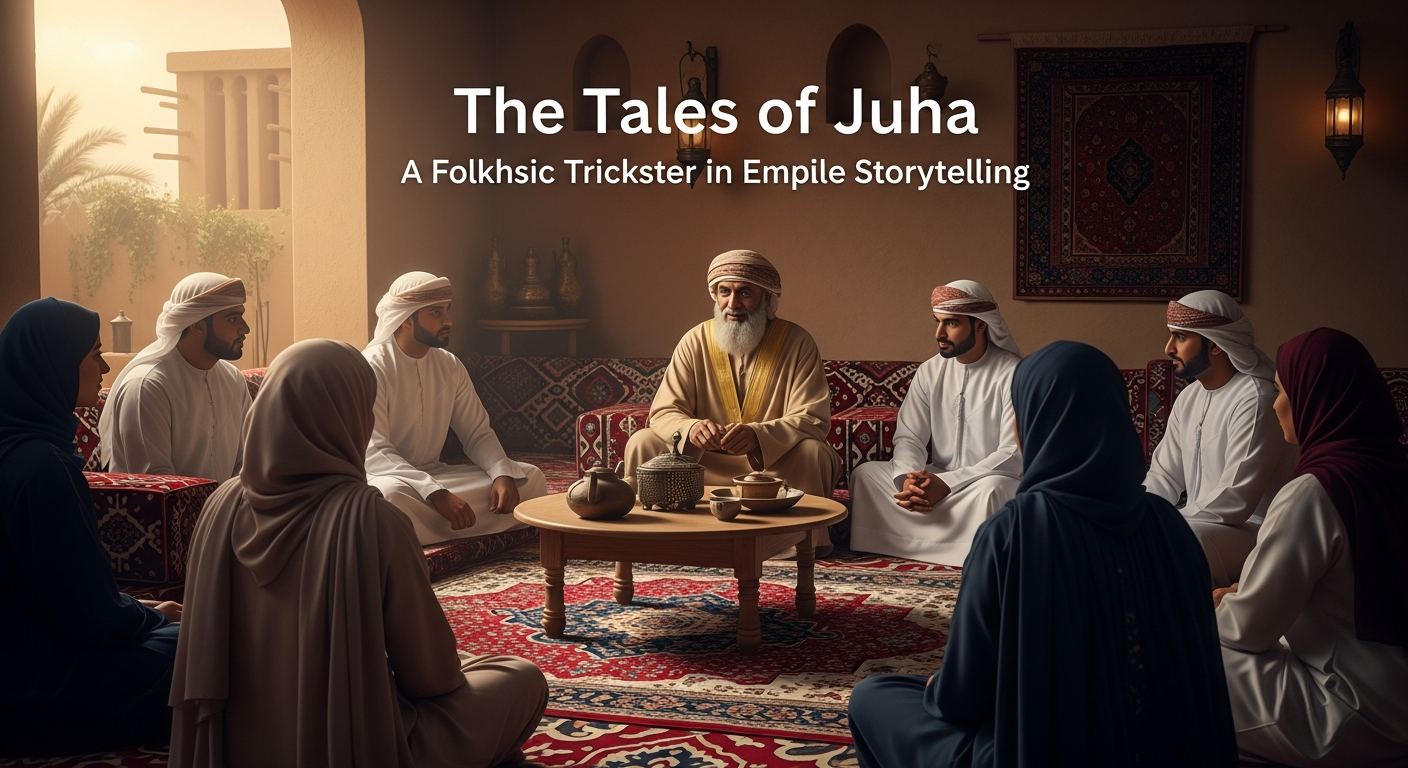
The tales of Juha were traditionally shared in social gatherings—in the majlis, around a campfire, or in the home. Grandparents would tell them to grandchildren, making them a primary tool for informal education. The stories were memorable and engaging, ensuring that their moral lessons stuck. They taught children the importance of honesty, the value of thinking for oneself, and the dangers of greed and pride. The narrative structure was simple: a setup, Juha’s seemingly foolish action, and a punchline that delivered the lesson, often with a twist that made the listener rethink their initial assumptions.
Variations and Enduring Legacy
The figure of Juha is a pan-Middle Eastern archetype, and his stories have countless variations across the Muslim world. In the UAE, the tales were adapted to the local context, incorporating elements of desert life, pearling, and Bedouin values. While the age of oral storytelling has waned, Juha remains a vibrant part of Emirati culture. His stories are published in children’s books, animated for television, and shared on social media. He remains a cultural touchstone, a symbol of a shared heritage of humor and wisdom that transcends generations.
Conclusion: The Laughter That Teaches
The enduring popularity of Juha speaks to the timeless power of storytelling. He is a cultural hero for the everyman, a reminder that wisdom does not always come from books and that laughter can be a powerful teacher. In a rapidly modernizing society, the tales of Juha provide a link to a simpler past, a time when community was forged through shared stories. He teaches that it is okay to be foolish sometimes, that cleverness can triumph over brute force, and that the ability to laugh at oneself is one of life’s greatest virtues. The laughter that echoes from a Juha story is, in itself, a profound piece of Emirati literary heritage.